
Turning Industrial Wastewater into Value: YASA ET Zero‑Liquid‑Discharge Case Studies
- Oct 21, 2025
- 4 min read
Updated: Oct 24, 2025
Introduction
Industrial operations generate large volumes of wastewater loaded with oils, salts, metals and other pollutants. Discharging this water directly into the environment threatens local ecosystems and often violates increasingly strict regulatory limits. Zero liquid discharge (ZLD) offers a way to solve this problem by recovering almost all water and converting pollutants into solid waste (1). By stringing together multiple technologies, ZLD facilities reduce waste volumes, recycle water on‑site and lower transportation and disposal costs (1).
At YASA ET, we see waste as another resource. Our PREDEST® electrocoagulation reactors, EVADEST® vacuum evaporators and SOLIDEST® multiple‑effect evaporators combine to create ZLD systems tailored for different industries. Below is an overview of the core technologies and then two real projects that illustrate how these systems deliver environmental compliance and financial savings.
What Is Zero Liquid Discharge?
Definition: ZLD is an approach to wastewater treatment where all water is recovered, and the remaining contaminants are concentrated into solids (1). This goal is more demanding than conventional wastewater treatment because cost and technical challenges increase as waste becomes more concentrated (1).
Benefits: Implementing ZLD reduces waste management costs, allows water reuse on‑site, reduces the number of disposal trucks and their associated greenhouse gas emissions, and improves environmental compliance (1). Some facilities even recover valuable resources from the brine, such as ammonium sulfate or sodium chloride (1).
Key Technologies in YASA ET ZLD Systems
Electrocoagulation (PREDEST®)
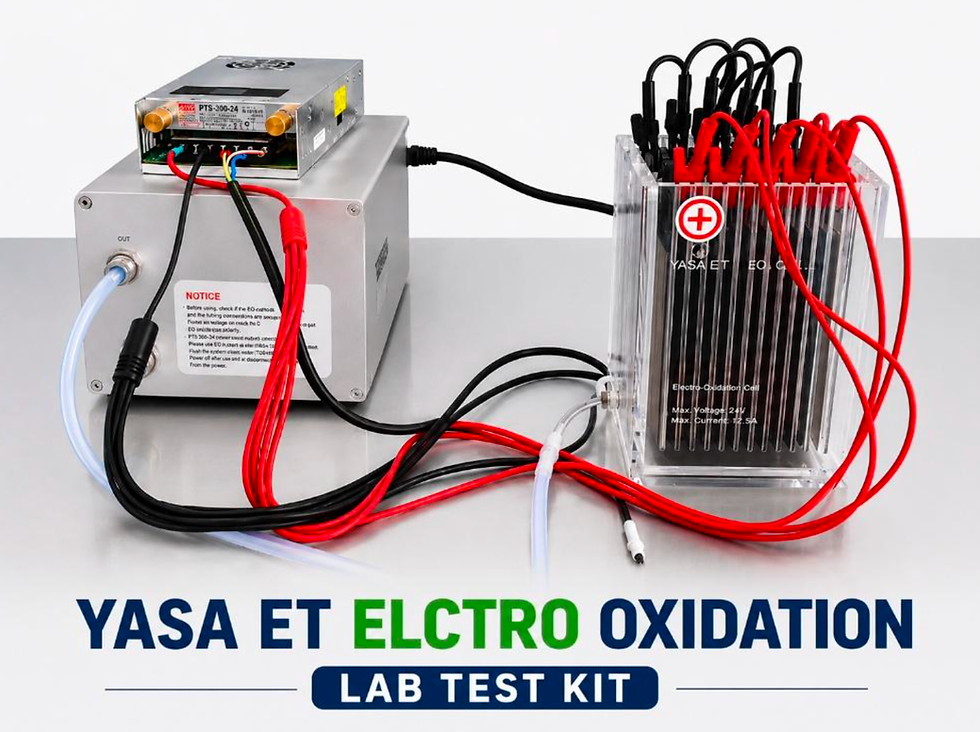
Electrocoagulation combines electrochemistry and traditional coagulation to purify water. When an electric current passes through contaminated water, the electrodes dissolve and generate metal ions that become coagulants (2). These ions form metal hydroxides that neutralize the charge on suspended and emulsified pollutants, causing them to aggregate into larger flocs (2).


Why it matters:
Versatile contaminant removal: Electrocoagulation can remove oils, heavy metals and organic compounds from industrial wastewater (2).
Lower chemical use: Coagulating agents are generated in situ, so fewer chemical additives are needed (2).
Less sludge: Compared with traditional chemical coagulation, electrocoagulation generates less sludge (2).
Compact and energy‑efficient: Systems can be modular and energy‑efficient (2).
Vacuum Evaporation (EVADEST®) and Multi‑Effect MVR (SOLIDEST®)
Vacuum evaporators reduce the boiling point of water by lowering pressure. The wastewater is heated in a closed chamber; under vacuum conditions it boils at lower temperatures, producing vapor and leaving behind a concentrated residue (3). The vapor is then condensed into high‑quality distillate water. Different configurations are used depending on flow rate and salinity:



Heat‑pump evaporators: Low‑temperature systems that recycle thermal energy, ideal for small‑to‑medium flows (3).
Mechanical vapor recompression (MVR) systems: Vapor is recompressed and reused as the heating source, making them energy‑efficient for large flows (3).
Multi‑effect evaporators: Multiple evaporation stages reuse heat from the previous stage, reducing energy consumption (3).
Advantages:
High water recovery: Vacuum evaporators recover a high percentage of clean water from contaminated streams (3).
Treatment of complex effluents: They can handle wastewater containing heavy metals, solvents and oils (3).
Waste minimization and resource recovery: Concentrating pollutants reduces downstream disposal requirements and can enable recovery of salts, oils or metals (3).
Regulatory compliance: Producing low‑conductivity distillate makes it easier to meet discharge limits and reuse water (3).
Case Study 1 – Schaeffler Group: Hazardous Wastewater Concentration


Background:
Schaeffler manufactures bearings and motion systems for the

automotive and aerospace industries. Its machining operations generate emulsified cutting fluids, heat‑treatment wastewater and heavy‑metal pickling effluents (4). The facility needed to treat approximately 20 tons per day of wastewater, including about 2 tons of hazardous waste (4).
YASA ET Solution:
A PREDEST® electrocoagulation reactor followed by an EVADEST® vacuum evaporator and rewater polishing system was installed (4). The plant began operation in November 2021.
Results:
Parameter | Before Treatment | After Treatment |
COD | 49,500 mg/L | 185 mg/L (4) |
Oil contaminants | 74.2 mg/L | 0.06 mg/L (4) |
Suspended solids | 46 mg/L | 14 mg/L (4) |
COD was reduced by over 99 % and oil contaminants were almost completely removed (4).
The distillate water met quality standards and was reused directly in production (4).
The project delivered significant cost savings in hazardous waste disposal and improved environmental compliance (4).
Case Study 2 – Shanghai Mitsubishi Elevator Motor: Factory Operations Wastewater Treatment

Background: Shanghai Mitsubishi Elevator Motor, a major manufacturer in the elevator and motor industry, needed to treat industrial production wastewater. The effluent contained stainless‑steel pickling and phosphorylating wastewater, and membrane‑filtration concentrate with sodium chloride and sulfate (~4 %) (4). The treatment capacity required was 10 tons per day (4).
YASA ET Solution: An EVADEST® vacuum evaporator system was supplied and commissioned. The system produces very pure distillate with a conductivity below 50 µS/cm and recovers approximately 90 % of the water (4).Results:
Distillate conductivity <50 µS/cm (high purity) (4).
Water recovery ≈90 % (4).
Disposal cost reduction of about USD 170,000 per year (4).
Effective treatment of high‑salinity wastewater from metal surface processing (4).
Produced ultra‑clean distillate that was reused in production and achieved high water recovery (4).
Sustainability Impact and Business Benefits
These case studies demonstrate how YASA ET’s integration of electrocoagulation and vacuum evaporation helps industries achieve ZLD:
Resource conservation: Recovering over 80–90 % of wastewater as high‑quality distillate means less fresh water is purchased and more is reused on‑site (4).
Cost savings: By significantly reducing COD and oil contaminants, companies avoid penalties and lower hazardous waste disposal costs (4). In the Mitsubishi case, annual savings were about US$170,000 (4).
Compliance and ESG performance: Meeting strict discharge limits enhances environmental compliance, aligns with corporate sustainability goals and contributes to better ESG reporting (4).
Scalability: YASA ET offers modular systems ranging from small heat‑pump evaporators to large multi‑effect MVR units (3). Systems can be tailored to treat cutting fluids, pickling effluents, pharmaceutical waste or food‑processing brine.
Conclusion
Industrial wastewater no longer needs to be a costly liability. By combining electrocoagulation and vacuum evaporation, YASA ET helps leading manufacturers like Schaeffler and Shanghai Mitsubishi achieve zero liquid discharge, recover clean water and reduce disposal costs. The results include pollutant reductions of greater than 99 %, high recovery rates and substantial savings.
If your facility faces complex wastewater challenges, explore how YASA ET’s PREDEST®, EVADEST® and SOLIDEST® systems can transform waste into value.
Visit www.yasa.ltd or email info@yasa.ltd for a consultation.




Comments