
Efficient Removal of Hardness and Silica from Wastewater Using a Coupled Electrochemical Crystallization-Electrocoagulation-Flocculation Process
Jul 7, 2025
2 min read
Published on: 7/7/2025 | By: YASA ET
Introduction
In recent years, dealing with high hardness and silica content in industrial wastewater has been a major challenge especially for reverse osmosis concentrate (ROC) generated in zero liquid discharge (ZLD) systems. A new scientific study published in Desalination (2024) presents an energy-efficient and scalable solution through a coupled electrochemical crystallization-electrocoagulation-flocculation system.
What Is This Process?
The researchers developed a membrane-free electrochemical crystallization system that:
Extracts acidic anolyte to spatially separate H⁺ and OH⁻ ions
Promotes homogeneous crystallization of hardness ions (Ca²⁺, Mg²⁺) and silica
Enhances sedimentation using electrocoagulation and a common flocculant (PAM)
Key Performance Highlights
Parameter | Removal Rate |
Total Hardness | 90% |
Magnesium Hardness | 76% |
Silica | 82% |
Energy Use | 2.4 kWh/m³ |
Optimal pH separation allows efficient crystallization of CaCO₃ and silicate compounds.
The presence of silica even helps reduce magnesium interference, forming sepiolite (Mg₄Si₆O₁₅(OH)₂·6H₂O).
Flocs from Fe or Al electrodes enhance crystal growth and accelerate sedimentation up to 18x faster than natural settling.
Real Results from PREDEST Electrocoagulation

Real-World Application Potential
This hybrid system is especially suited for:
RO brine (ROC) treatment in power plants, chemical factories, semiconductor, and cooling tower circuits
Industries targeting low-energy ZLD operation
Cases with high concentrations of hardness ions + silica in a compact footprint
Scientific Innovation
Key innovations in the process include:
Membrane-free crystallization with acid-layer extraction
Integrated electrocoagulation and flocculation to improve sedimentation
PAM-assisted settling for fast removal of fine crystalline particles
Low operating cost: Only ~$0.26/m³ in energy at 0.108 USD/kWh
Read the Full Research
Title: Coupled electrochemical crystallization-electrocoagulation-flocculation process for efficient removal of hardness and silica from reverse osmosis concentrate Authors: Xuesong Wang, et al.Published in: Desalination, 2024 Click here to read the full article
Want to Implement Similar Technology?
At YASA ET, we develop electrochemical solutions for advanced water treatment including:
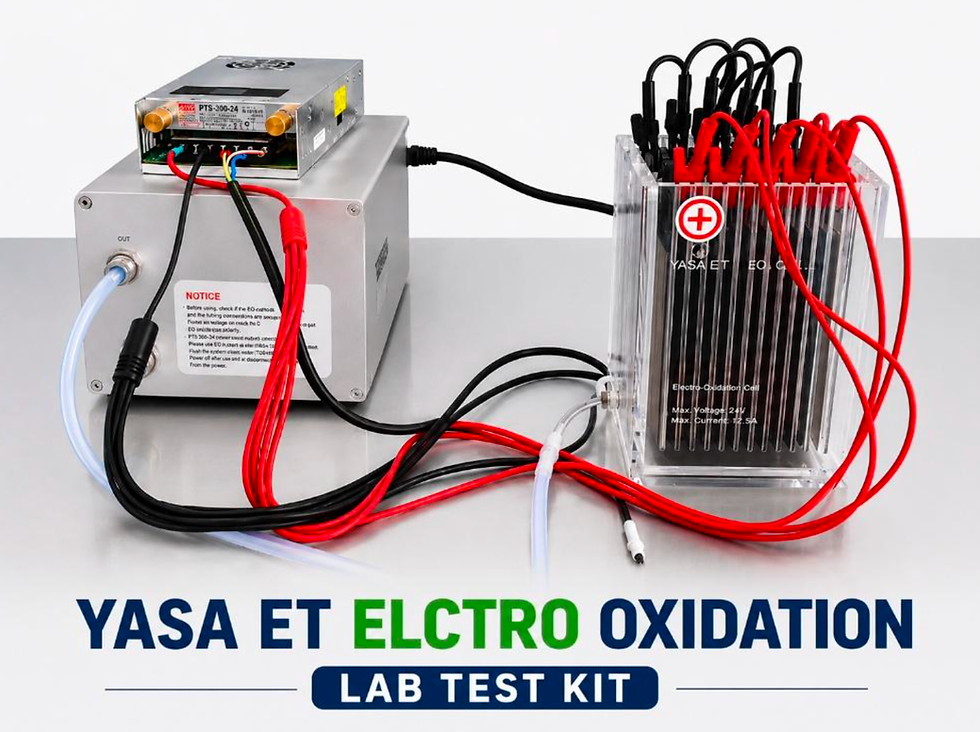
Lab-scale crystallization test kits
Full-scale electrocoagulation pilot units
BDD-based electro-oxidation cells



Comments